Somewhere between the Starter plan’s two-contributor cap and the $300 AI Suite invoice, a lot of ClickHelp customers end up doing the same math: what am I actually paying for, and does it scale the way my documentation does?
That question, not one broken feature, is what sends most teams looking at ClickHelp alternatives.
The core authoring tool works fine. It’s the plan tiers, the metered AI, and a category system that flattens out once a docs site outgrows a simple manual, that push people to start comparing.
Ten tools make up this list. ProProfs Knowledge Base ranks first because it answers the pricing question directly, tracks costs by author rather than by plan tiers, and doesn’t make AI a separate line item.
The other nine solve narrower, sharper versions of the same underlying problem, deeper single-sourcing, developer-first docs, or something lighter altogether. Here’s the breakdown.
Why Teams Look for ClickHelp Alternatives
Every complaint below appeared more than once on Capterra, G2, and ClickHelp’s own pricing page, so before picking a replacement, it helps to know which one is actually yours.
A Sixth Writer Means a New Tier, Not a New Seat: Starter includes two contributors, Growth includes five, Professional includes ten. ClickHelp doesn’t sell single extra seats inside a tier, so one writer past your plan’s cap means upgrading the whole plan, not adding a line item.
AI Search Costs Extra, Then Runs Out: The AI Suite add-on runs $300 a month with a 30,000-CAP monthly ceiling, roughly 3,000 answers. Cross it, and AnswerGenius simply stops answering readers until the next billing cycle resets.
Deep Category Trees Aren’t the Strong Suit: SelectHub’s own product analysis notes that ClickHelp isn’t especially well suited to knowledge bases needing highly specific category structures, a real limitation once a docs site grows past a flat topic list.
Nothing Works Without a Connection: No offline mode and no dedicated mobile app, a recurring complaint on Capterra from anyone who needs to reference or review documentation away from a browser.
None of This Means the Tool Is Bad: Support response times and the core authoring experience score well across every review platform checked here. This is a pricing-and-structure mismatch for particular teams, not a quality problem, worth saying plainly before anyone switches purely on principle.
Top 10 ClickHelp Alternatives at a Glance
The list below spans everything from roughly desktop software to enterprise platforms, so price alone won’t tell you which one fits.
Skim the table first, then read the entries that match your actual constraint.
| Tool | Best For | Key Strength | User Rating | Starting Price |
| ProProfs Knowledge Base | No-code, dual internal and external documentation | AI Writer, AI Search, flexible category structure | 4.7/5 (Capterra) | Free forever; paid from $49/author/month |
| Document360 | AI-powered SaaS customer help centers | Eddy AI, category management, versioning | 4.7/5 (Capterra) | Quote-only, no published pricing |
| MadCap Flare | Deepest desktop single-sourcing | Condition logic, print-grade PDF output | 4.1/5 (Capterra) | $3,150/author/year |
| Confluence | Atlassian-stack enterprise teams | Deep permissions, 1,000+ marketplace apps | 4.5/5 (Capterra) | Free for up to 10 users; paid from $5.42/user/month |
| Paligo | Enterprise structured content reuse | Phrase-level content reuse, built-in translation management | 4.6/5 (G2; Capterra has only 1 review) | Custom quote, no free trial |
| Archbee | Developer-facing API documentation | Custom blocks, GitHub, and OpenAPI sync | 4.7/5 (Capterra) | From $80/month, AI and analytics are priced separately |
| HelpNDoc | Budget desktop tool for solo writers | Word-processor-style editor, 20+ export formats | 4.1/5 (G2; No ratings on Capterra) | From €99 |
| Notion | Lightweight all-in-one docs and wiki | Flexible blocks, linked databases | 4.7/5 (Capterra) | Free; paid from $10/user/month |
| Heretto | DITA-native documentation at scale | Real-time co-editing, structured governance | 4.1/5 (G2; Capterra has only 3 reviews) | Custom quote, no free trial |
| GitBook | Git-native docs-as-code publishing | Pull-request review flow, clean reader experience | 4.5/5 (Capterra) | Free, paid from $65/site/month |
1. ProProfs Knowledge Base: Best for No-Code, Dual Internal and External Documentation
The moment that actually got me looking at ClickHelp alternatives wasn’t a bug; it was watching a plan-comparison page do the math for me: two more writers meant jumping an entire tier. ProProfs Knowledge Base doesn’t have that cliff.
Pricing tracks the number of authors directly, and the category structure never needed a blueprint before I published the first page.
Content creation is where the time savings showed up first. AI Writer turned a rough bullet outline into a full draft, expanded sections I’d left as placeholders, and condensed a long setup guide into something short enough for a quick-reference card, all without leaving the editor.
Review used to mean a Word file with tracked changes bouncing between three inboxes. Here, a subject matter expert just comments on the exact paragraph that’s wrong, and the fix happens where the content already lives.
The part that mattered most for the actual documentation problem was the search. AI Search reads intent rather than exact phrasing, so a reader typing “why won’t it sync” still lands on an article titled “Troubleshooting Connection Errors.”
The failed-search report turned gap-finding into a list instead of a guess, showing exactly which questions the docs weren’t answering yet.
No plan-tier cliff, no separate AI invoice, and a category structure that grew with the content instead of ahead of it; that combination is why this sits first on the list rather than as one more comparison.
Pros
- AI Writer drafts, expands, and tightens articles inside the same editor, no separate writing tool required
- AI Search reads intent, not just keywords, so mismatched phrasing still finds the right article
- Author-based pricing instead of plan tiers, adding a writer doesn’t force a tier jump
- Category and folder structure flexes as content grows, no upfront blueprint required
- Internal commenting keeps the review inside the article instead of a separate document
- Free forever for one author and 25 pages, full feature set included
Cons:
- No downloadable or on-premise version
- No dark mode
How It Compares to ClickHelp: ClickHelp sells contributor slots in fixed blocks and prices AI separately, with a usage cap. ProProfs Knowledge Base ties costs directly to authors and includes AI Writer and AI Search without a meter running in the background. The plan-tier math that starts most of these searches disappears here rather than just moving somewhere else.
Pricing: Free forever for one author and up to 25 pages. Essentials starts at $49/author/month, billed annually. Business runs $79/author/month for up to five authors. Custom domain and white-label branding cost an additional $300/year.
User Rating: 4.7 out of 5 (Capterra)
Descartes Systems (Germany) GmbH ran its end-user documentation on a tool so inflexible that basic editing was a struggle, before switching to ProProfs Knowledge Base. Documentation there is now something the whole team edits together instead of one person defending, and it’s kept growing since.
2. Document360: Best for AI-Powered SaaS Customer Help Centers
I built a customer-facing docs site in Document360 for an earlier project, so this one’s firsthand.

The version and category system meant two product releases could stay documented side by side without duplicating half the content, and Eddy AI answering reader questions straight from published articles visibly cut repeat tickets inside the first month.
Getting an actual price out of them was the sticking point. Document360 pulled its public pricing page in late 2024, so instead of comparing numbers side by side with ClickHelp, I was booking a call just to find out what a plan costs.
Pros:
- Eddy AI answers reader questions directly from published articles, visibly cutting repeat tickets within the first month
- The version and category system lets two product releases stay documented side by side without duplicating content
- AI search, an AI writing agent, and a reader-facing chatbot are bundled into every tier, no metered add-on or usage cap to run into
- Category and versioning structure built specifically for teams shipping product updates on a regular cadence
Cons:
- Public pricing page pulled in late 2024, so getting an actual number means booking a call first
- No side-by-side price comparison possible against other tools without going through sales
How It Compares to ClickHelp: Both are dedicated documentation platforms, but Document360 leans more heavily into customer-facing help centers with AI search, while ClickHelp leans more on single-sourcing across internal and external docs alike. If the ClickHelp complaint is specifically the metered AI add-on, this removes that specific cost.
Pricing: No published pricing since late 2024. Historical tiers ran from roughly $199 to $499 per project, per month, before the shift to custom quotes.
User Rating: 4.7 out of 5 (Capterra)
3. MadCap Flare: Best for Deepest Desktop Single-Sourcing
Flare wasn’t on my own trial list here, so take this as secondhand: a mix of Capterra and G2 review patterns, plus a conversation with a writer who moved a 500-page manual onto it.
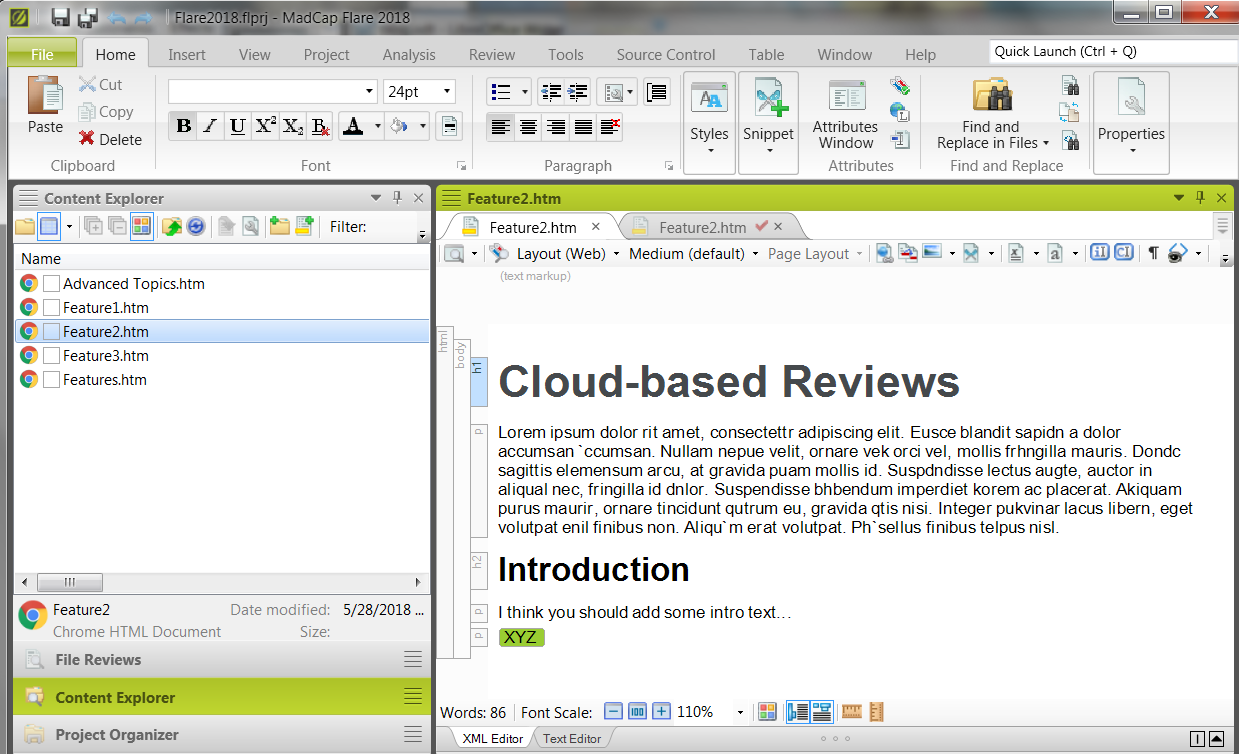
What reviewers consistently praise is depth, condition logic rated as best-in-class, target-based single-sourcing, and print-grade PDF output with layout control that cloud-first tools rarely offer.
The recurring complaint is the ramp-up. Capterra scores ease of use at just 3.5 out of 5; the tool is Windows-only, and the subscription runs $3,150 per author per year, up from $2,999 earlier in 2026.
Pros:
- Condition logic rated best-in-class for target-based single-sourcing across multiple outputs
- Print-grade PDF output with layout control that cloud-first tools rarely match
- Snippet and variable system lets a team reuse a single warning callout or product name across hundreds of topics and update it everywhere at once
- Translation tooling through MadCap Lingo built for teams shipping documentation in a dozen languages at once
Cons:
- Capterra scores ease of use at just 3.5 out of 5, reflecting a real ramp-up curve
- Windows-only, and the subscription runs $3,150 per author per year, up from $2,999 earlier in 2026
How It Compares to ClickHelp: Both do topic-based single-sourcing, but Flare goes considerably deeper on conditional publishing and print output, at a real cost in price and learning curve. Teams leaving ClickHelp because they need more structural depth, not less, tend to land here.
Pricing: $3,150 per author per year, subscription only, desktop software with a separate quote for cloud hosting.
User Rating: 4.1 out of 5 (Capterra)
4. Confluence: Best for Atlassian-Stack Enterprise Teams
My exposure to Confluence came from documenting an internal API at a previous role, not a customer-facing help site. What worked well was version history, being able to point a new hire to exactly what changed and when, without a separate changelog doc that immediately went stale.

Where it fell short for actual documentation work was the templates. The prebuilt options are clearly built for meeting notes and project trackers, not step-by-step technical guides, so I ended up building a structure from a blank page anyway.
Pros:
- Version history lets a new hire see exactly what changed and when, without a separate changelog doc going stale
- Deep permission and integration options for teams already on Atlassian
- Functions as a broader team wiki beyond just documentation, handling meeting notes and project tracking too
- 1,000+ marketplace apps extend functionality further for teams already invested in Atlassian tools
Cons:
- Prebuilt templates are built for meeting notes and project trackers, not step-by-step technical guides
- Ends up requiring a structure built from a blank page for actual documentation work
How It Compares to ClickHelp: ClickHelp is purpose-built for technical documentation and single-sourcing. Confluence is a broader team wiki that handles documentation reasonably well, with far deeper permission and integration options for teams already on Atlassian. Switching here usually trades documentation specialization for ecosystem depth.
Pricing: Free for up to 10 users. Standard runs $5.42/user/month, billed annually. Premium runs $10.44/user/month. Enterprise is custom-quoted.
User Rating: 4.5 out of 5 (Capterra)
5. Paligo: Best for Enterprise Structured Content Reuse
Paligo didn’t make it into my hands-on testing for this piece; this section leans on my colleague’s reviews, along with a demo another colleague sat through.
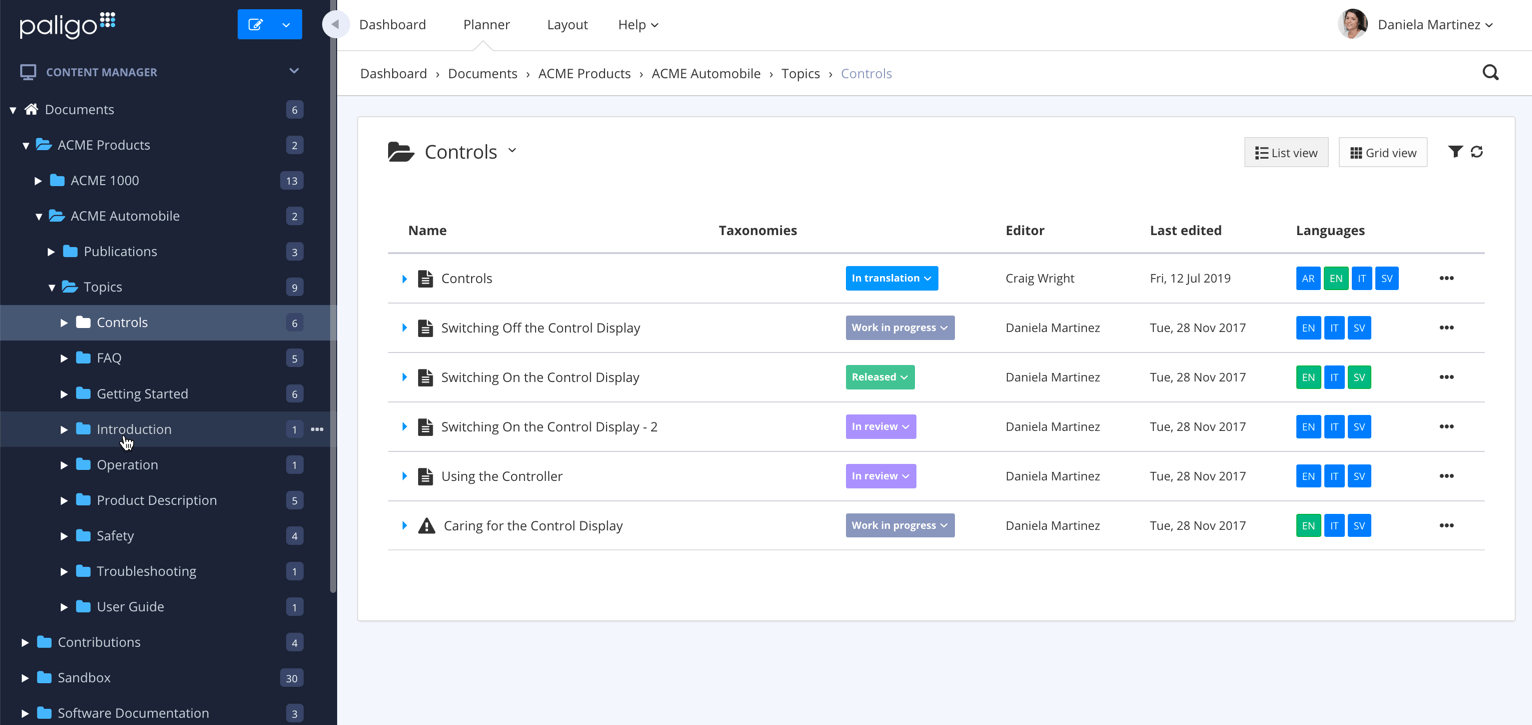
The reuse depth is the best thing, like seeing exactly where a single phrase gets reused across projects, plus translation management built directly into the platform rather than bolted on afterward.
The complaint that repeats is cost and access. There’s no free trial and no published pricing to compare against ClickHelp’s own tiers, and more than one reviewer specifically flagged it as expensive and thin on integrations outside Zendesk.
Pros:
- Reuse depth shows exactly where a single phrase gets reused across projects, then updates it everywhere at once
- Translation management built directly into the platform rather than bolted on afterward
- Governance controls show precisely where each reused component or phrase is used across every project
- Component and phrase-level reuse goes deeper than project-level single-sourcing alone
Cons:
- No free trial and no published pricing to compare against other tools upfront
- Reviewers specifically flag it as expensive and thin on integrations outside Zendesk
How It Compares to ClickHelp: ClickHelp offers single-sourcing at the project level. Paligo offers reuse at the component and phrase level, with governance over exactly where each piece gets used. That depth is the entire value proposition, and also why it costs several times more.
Pricing: Custom quote, no free trial.
User Rating: 4.6 out of 5 (G2; Capterra has only 1 review)
6. Archbee: Best for Developer-Facing API Documentation
Archbee wasn’t one I tested myself for this guide; the following is stitched together from Capterra reviews and a couple of developer-forum threads about API documentation tooling.

The GitHub sync is what earns the praise. Teams describe endpoint changes flowing into the docs automatically instead of someone remembering to update a code example by hand.
The add-on pricing is what earns the complaint. The advertised $80 doesn’t include AI Write Assist, analytics, or API access, so the number of people actually budgeted rarely matches the number on the homepage.
Pros:
- GitHub sync flows endpoint changes into the docs automatically, no manual code example updates
- Purpose-built for developer and API documentation specifically
- OpenAPI sync and custom blocks tailored to API reference documentation
- Lighter footprint than a full single-sourcing platform for teams that just need developer docs
Cons:
- Advertised $80/month doesn’t include AI Write Assist, analytics, or API access
- Real budgeted cost regularly lands past the number shown on the homepage
How It Compares to ClickHelp: ClickHelp handles general technical documentation. Archbee is purpose-built for developer and API documentation specifically, with a lighter footprint than a full single-sourcing platform. If the ClickHelp use case was really API references, this is the closest match.
Pricing: Advertised from $80/month, with AI Write Assist, analytics, API access, and the embeddable widget priced as separate add-ons.
User Rating: 4.7 out of 5 (Capterra)
7. HelpNDoc: Best Budget Desktop Tool for Solo Writers
I haven’t opened HelpNDoc myself; this comes from G2 reviews and a few forum posts from solo writers and freelancers.

What reviewers consistently like is the word-processor-style editor, closer to something like Microsoft Word than a technical authoring tool, plus exports to more than 20 output formats, including CHM, PDF, and WebHelp.
The complaint that shows up fastest is collaboration. HelpNDoc is Windows-only and wasn’t built for real-time co-editing, so a second or third writer joining a project still means passing a file back and forth.
Pros:
- Word-processor-style editor, closer to Microsoft Word than a technical authoring tool
- Exports to more than 20 output formats, including CHM, PDF, and WebHelp
- Starts around €99, far cheaper than cloud collaboration platforms built for teams
- Built specifically for a solo writer, without the overhead of a team-oriented platform
Cons:
- Windows-only, with no real-time co-editing built in
- A second or third writer joining a project still means passing a file back and forth
How It Compares to ClickHelp: Both handle topic-based authoring and multi-format export, but HelpNDoc trades ClickHelp’s cloud collaboration and single-sourcing depth for a much lighter, cheaper desktop tool. It’s built for a solo writer, not a growing team.
Pricing: Professional Edition from €99, one-time or subscription, depending on the license.
User Rating: 4.1 out of 5 (G2; No ratings on Capterra)
8. Notion: Best for a Lightweight, All-in-One Docs and Wiki
I use Notion for personal project notes, and out of curiosity, tried structuring a short user guide in it for this comparison. Linking a troubleshooting database directly to the guide meant one edit updated both places at once, something a purely topic-based tool doesn’t really offer.

The gap showed up fast on the documentation side, specifically: no version history worth relying on at the free tier, and no clean way to publish a standalone, reader-facing site the way a dedicated docs tool can. It reads more like a wiki wearing a documentation tool’s clothes.
Pros:
- Linking a troubleshooting database directly to a guide means one edit updates both places at once
- Flexible blocks let content be structured without a rigid topic-based framework
- Free plan available for individuals and small teams, no cost barrier to start
- Doubles as a general team workspace beyond just documentation, thanks to linked databases
Cons:
- No version history worth relying on at the free tier
- No clean way to publish a standalone, reader-facing site the way a dedicated docs tool can
How It Compares to ClickHelp: ClickHelp enforces structure through topics and projects. Notion leaves structure entirely up to your team, faster to start, but it asks for more discipline to keep documentation from sprawling. It’s a much lighter tool than ClickHelp, not a direct swap for a deep technical manual.
Pricing: Free for individuals and small teams. Plus runs $10/user/month, billed annually. Business runs $20/user/month. Enterprise is custom-quoted.
User Rating: 4.7 out of 5 (Capterra)
9. Heretto: Best for DITA-Native Documentation at Scale
Heretto stayed outside my own testing for this piece; this is based on reviews and a chat with a documentation manager evaluating CCMS platforms for an enterprise rollout.

What reviewers praise most is the editing experience, a Google Docs-like interface with real-time co-editing and no check-in or check-out step, plus drag-and-drop content reuse across a large documentation set.
The recurring complaint is onboarding. There’s no published pricing and no free trial, and reviewers describe the setup process as genuinely challenging for teams new to structured, DITA-based authoring.
Pros:
- Google Docs-like real-time co-editing with no check-in or check-out step
- Drag-and-drop content reuse across a large documentation set
- Governance built for large technical publications teams operating at enterprise scale
- DITA-native structure suited to strict, structured-content requirements
Cons:
- No published pricing and no free trial
- Setup process described as genuinely challenging for teams new to structured, DITA-based authoring
How It Compares to ClickHelp: ClickHelp treats single-sourcing as a core feature. Heretto is DITA from the ground up, built for large technical publications teams with governance needs that ClickHelp was never designed to handle. It’s aimed at a different scale of documentation team entirely.
Pricing: Custom quote, no free trial.
User Rating: 4.1 out of 5 (G2; Capterra has only 3 reviews)
10. GitBook: Best for Git-Native Docs-as-Code Publishing
GitBook wasn’t part of my hands-on research here either; the following draws on G2 reviews and developer-forum threads from teams shipping docs straight out of a Git repo.
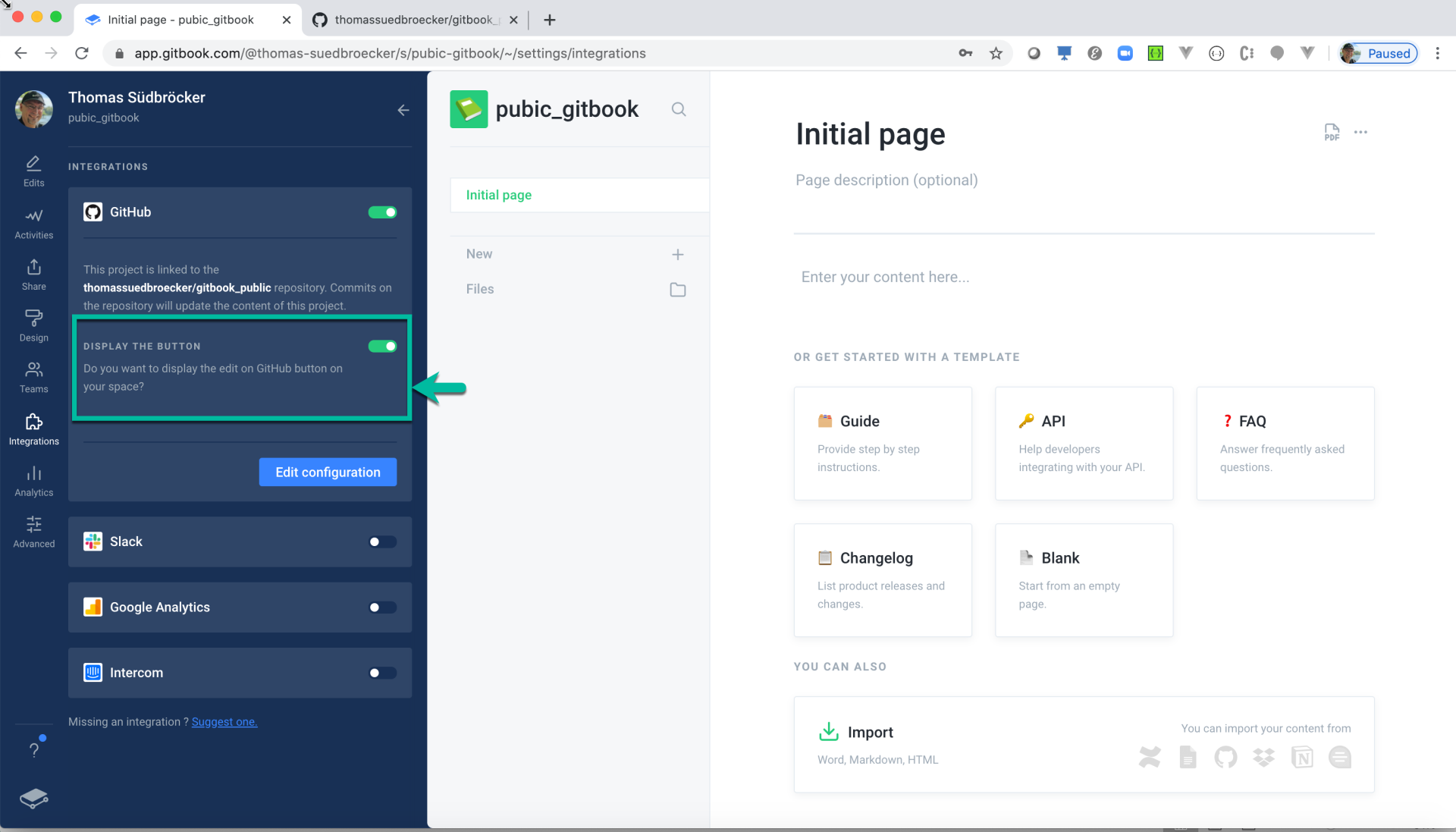
The praise that repeats is the review workflow. Engineering teams describe genuinely preferring pull-request-based doc reviews over a traditional CMS, since changes go through the same process as code changes.
The complaint that repeats is the price jump. Free stops at a single user, so real team collaboration means moving straight to a paid site, with the AI Assistant reserved for the priciest tier above that.
Pros:
- Pull-request-based doc reviews let documentation changes go through the same process as code changes
- Clean reader experience with content living as Markdown directly in a Git repo
- Content ships automatically on merge, no separate publishing step once a pull request is approved
- Strong fit for developer-heavy teams already comfortable working inside Git
Cons:
- Free plan stops at a single user, so real team collaboration requires a paid site
- AI Assistant is reserved for the priciest tier above the base paid plan
How It Compares to ClickHelp: ClickHelp is a traditional browser-based authoring portal. GitBook is Git-native, content lives as Markdown in a repo, and ships on merge. That’s a real strength for developer-heavy teams and a real loss for writers who aren’t comfortable working in Git.
Pricing: Free, paid from $65/site/month.
User Rating: 4.5 out of 5 (Capterra)
My Top 3 Picks for ClickHelp Alternatives
Ten options, three budgets you’re actually choosing between. Weighing the switching pattern against real 2026 pricing, these are the picks that solve a specific version of the ClickHelp problem rather than a generic one.
1. ProProfs Knowledge Base
The AI Writer and AI Search ship standard rather than metered, no CAPs to track, no add-on to negotiate separately when budget season comes around.
The category tree grows with your content instead of needing a blueprint on day one, which matters most for teams whose documentation started as a handful of guides and turned into something bigger without anyone planning the structure in advance.
Vault keeps a full revision history, so restructuring a category doesn’t carry the risk it would on a tool with weaker version control, and internal commenting means a subject matter expert can flag an error inside the article itself instead of a separate review document.
Test the whole workflow on the free-forever tier, one author, 25 pages, every feature included, before any budget conversation happens at all.
2. MadCap Flare
Pick this one if ClickHelp’s single-sourcing already feels shallow rather than expensive, deeper condition logic, print-grade PDF output, and target-based publishing that a lighter tool can’t match.
Flare’s snippet and variable system lets a five-person writing team reuse a single warning callout or product name across hundreds of topics and update it once everywhere, and its translation tooling through MadCap Lingo is built for teams shipping documentation in a dozen languages at once, not bolted on as an afterthought.
The ramp-up runs weeks, not days. Capterra scores ease of use at just 3.5 out of 5, and the software is Windows-only, so budget real onboarding time and a compatible environment before anyone becomes productive in it.
For a large technical writing team with dedicated authoring resources and print-heavy output requirements, that depth is the entire point of switching, not a trade-off to tolerate.
3. Document360
Pick this one if the metered AI add-on is specifically what’s pushing you to look elsewhere.
Eddy AI bundles AI search, an AI writing agent, and a reader-facing chatbot into every tier, no separate invoice, no CAPs ceiling to watch, and no month where AI features simply stop working because a usage limit got crossed.
The category and versioning structure is purpose-built for documenting multiple product releases side by side, useful for SaaS teams shipping updates on a regular cadence who need last month’s docs to stay intact while this month’s get published.
For teams whose docs are customer-facing first, help center content people are meant to self-serve from rather than internal manuals, the category and versioning setup is purpose-built for exactly that.
Evaluation Criteria
I evaluated the ClickHelp alternatives in this list against what actually determines whether a documentation switch pays off, not just a feature checklist. Six factors shaped every entry above:
User Reviews / Ratings: Capterra and G2 write-ups told me more about day-to-day friction than any spec sheet, so I read for patterns in single-sourcing complaints, onboarding time, and how pricing actually landed once seats and add-ons were counted.
Essential Features & Functionality: Single-sourcing, category and version management, AI-assisted writing and search, multi-channel export. These are what a ClickHelp switch is really about, so each tool was checked against how well it holds up beyond a simple topic list.
Ease of Use: Documentation is written only if the tool doesn’t fight the writer. I weighed the ramp-up time each platform required before a technical writer or product manager could publish something real.
Customer Support: Migrations break things. I looked at what happens when they do, specifically how each vendor handles topic imports, category rebuilds, and single sign-on setup during an actual switch.
Value for Money: Sticker price rarely matches the real price once seat minimums, per-site fees, or a metered add-on come into play, so I priced out what a mid-sized documentation team would actually pay, not just the homepage number.
Personal Experience / Experts’ Opinions: Where I’ve used a tool directly, that’s reflected plainly here. Where I haven’t, I leaned on documented reviewer patterns rather than guessing, and said so up front.
FREE. All Features. FOREVER!
Try our Forever FREE account with all premium features!
How Do You Choose the Right ClickHelp Alternative?
Skip the wish list. Whichever row below matches your actual complaint, is the tool worth trialing first.
| If Your Primary Problem Is… | Consider This First |
| ClickHelp’s plan tiers keep forcing pricing jumps | ProProfs Knowledge Base |
| You need deeper single-sourcing and print output | MadCap Flare |
| You want AI search included, not metered separately | Document360 |
| Your team is already inside the Atlassian ecosystem | Confluence |
| You need enterprise-grade, phrase-level content reuse | Paligo |
| Your docs are really API references for developers | Archbee |
| You’re a solo writer on a tight, one-time budget | HelpNDoc |
| The category structure feels heavier than your team needs | Notion |
| You need DITA-native structure and governance at scale | Heretto |
| Your team already ships product through Git | GitBook |
Everything in this table assumes you already know what’s actually bothering you about ClickHelp.
If a plan-tier jump or a metered AI bill is the answer, ProProfs Knowledge Base is built around removing exactly that, not working around it.
Do the Math Before You Renew
ClickHelp isn’t a bad tool, and nothing above changes that. The single-sourcing workflow works, support responds fast, and plenty of teams renew every year without a second thought.
What’s worth fifteen minutes before your next renewal is running the actual numbers: what does a sixth writer cost at your current tier, and what does AI search cost on top of that?
For some teams, the answer is fine as is. For others, it’s the exact math that MadCap Flare, Document360, and ProProfs Knowledge Base each solve differently, through depth, through AI-included pricing, or through author-based cost with no tier cliff.
Run that math against your own team size before comparing feature lists. It’ll tell you which three rows in the table above are worth an actual trial, and which seven you can skip entirely.
Frequently Asked Questions
Is ClickHelp still being actively developed?
Yes, actively. The 2026 AI Suite added a chatbot and a writing assistant on top of the core platform. That investment hasn't touched the underlying complaint, though: AI still costs $300 a month extra with a hard usage cap, so active development and unpredictable pricing are currently running side by side.
What's the cheapest real alternative to ClickHelp?
ProProfs Knowledge Base's free-forever tier covers one author and 25 pages with every feature unlocked, not a stripped trial. Notion's free plan works for lighter, less structured docs. GitBook is free too, but caps out at a single user, which rules it out for anything beyond solo projects.
Which alternative fits a solo writer with no budget for enterprise tools?
HelpNDoc's roughly €99 Professional Edition is built for exactly this: one writer, desktop software, no monthly bill. ProProfs Knowledge Base's free tier is worth trying first, regardless, since it costs nothing and doesn't cap the feature set the way most free trials do.
Can existing ClickHelp topics be migrated somewhere else?
Generally, yes. ClickHelp exports to HTML5, PDF, DOCX, and CHM formats that most competing tools already import. ProProfs Knowledge Base includes free migration help on paid plans. Budget real-time regardless, topic-based projects rarely drop cleanly into a different tool's category structure without some rebuilding.
Does anything on this list support DITA specifically?
Heretto is DITA-native from the ground up. Paligo uses DocBook instead, but offers comparably deep, component-level content reuse. ClickHelp handles single-sourcing well but stops short of true DITA authoring, so strict structured-content requirements usually point toward one of these two first.
Why does MadCap Flare cost so much more than ClickHelp?
Depth. Flare's $3,150-per-author annual price buys condition logic and print-grade output that reviewers consistently rate above ClickHelp's simpler single-sourcing model. It's a real cost difference for a real capability difference, worth it for teams that need the depth, hard to justify for teams that don't.
What's the better fit for API documentation, Archbee or GitBook?
Archbee leans toward polished, branded API references with OpenAPI sync built in. GitBook leans toward teams who want documentation reviewed the same way code is, through pull requests. Pick based on workflow: branded output favors Archbee, a Git-native review process favors GitBook.
How disruptive is a switch away from ClickHelp, realistically?
Less than most teams expect if it's scoped correctly. Migrating one project or product line first, rather than the whole portal at once, usually takes two to four weeks and surfaces any structural mismatches early, before the rest of the documentation set depends on getting it right.
FREE. All Features. FOREVER!
Try our Forever FREE account with all premium features!

 We'd love your feedback!
What did you like & how can we make it even better?
 Thanks for your feedback!
 Ask Your Question
Have a question? Get expert help to make your decision easier.