I’ve used Google Docs for years, and it’s still my go-to for a quick draft I need to share in the next five minutes.
Real-time editing, comments, and the fact that everyone already has an account are not in question.
The trouble starts when a team stops writing a single document and starts trying to manage dozens of them.
That’s when the Google Docs alternatives searches begin, because Docs has no homepage, no content status, no reporting, and no meaningful access control beyond who can view, comment, or edit.
If you’re past the single-document stage and into “where did that even go,” this list covers 10 tools I’d consider, including where each one beats Docs and where it falls short.
Why Look for Google Docs Alternatives?
Google Docs is one of the most widely used writing tools in the world, and for a single document shared between a few people, it’s hard to beat.
The gaps show up once you’re managing many documents as a body of knowledge rather than one file at a time.
It Doesn’t Host a Public Site: Docs generates a shareable link, not a branded site of your own. If you want customers or new hires to land on a real homepage instead of a folder of loose links, you need a tool designed to publish, not just share.
There’s No Content Status or Workflow: I can’t mark a document “Ready for Review” or “Needs an Update” in Docs. Once a team has more than a handful of documents in flight, that missing workflow is how outdated pages quietly pile up.
There’s No Built-In Reporting: Docs won’t tell me which pages get read, which searches come up empty, or which articles are stale. Without that data, I’m guessing at what to fix instead of knowing.
Search Breaks Down Past a Certain Point: Docs’ search works fine for one Drive folder. It falls apart once content is split across dozens of folders, several contributors’ naming conventions, and a lack of shared structure.
10 Google Docs Alternatives Worth Adding to Your Shortlist
Here’s how the 10 tools I considered stack up before the full breakdown below. The table gives you the fast version, best fit, starting price, and user rating for each tool, so you can narrow to two or three candidates before reading further.
| Tool | Best For | Starting Price | User Rating |
| ProProfs Knowledge Base | Structured, searchable documentation and AI-powered knowledge base | Free forever; paid from $49/author/month | 4.7/5 (Capterra) |
| Microsoft 365 | Real-time coauthoring in a familiar interface | Free for Microsoft users; paid from $7/user/month | 4.6/5 (Capterra) |
| Notion | Notes, docs, and databases in one workspace | Free; paid from $10/user/month | 4.7/5 (Capterra) |
| Confluence | Engineering and IT teams are already on Jira | Free for up to 10 users; paid from $5.42/user/month | 4.5/5 (Capterra) |
| Coda | Docs that also act like a database | Free plan available; paid from $12/month per Doc Maker | 4.6/5 (Capterra) |
| Nuclino | Fast, no-frills team wiki | Paid plans from €6/user/month | 4.7/5 (Capterra) |
| Zoho Writer | Free editor for teams already on Zoho | Free up to 200 credits/month; add-on credits from $0.25/credit | 4.5/5 (Capterra) |
| ONLYOFFICE | Budget-friendly Microsoft format compatibility | 30-day free trial; custom pricing | 4.5/5 (Capterra) |
| Dropbox Paper | Lightweight docs for existing Dropbox users | Free plan available; paid from $15/user/month | 4.4/5 (Capterra) |
| Quip | Chat and docs together for Salesforce teams | Paid from $10/user/month | 4.4/5 (Capterra) |
Here’s the full breakdown of all the Google Docs alternatives:
1. ProProfs Knowledge Base – Best for Easiest Customer Support Help Center & Internal Employee Knowledge Base in One
Among the alternatives to Google Docs on this list, ProProfs Knowledge Base is the one made specifically to solve what Docs was never designed for: turning a growing pile of documents into something people can search, control access to, and measure.
AI Writer drafts a full article in seconds and refines it on command, so I’m not staring at a blank page the way I would start a new Doc.
Roles and permissions let me decide exactly who can write, edit, and publish, and private sites with SSO handle the internal-only content that a Drive link was never designed to secure.
AI Search Assistant returns one precise answer instead of a list of links to click through, which matters the moment a workspace grows past the size where anyone can remember which of forty documents has the answer.
Pros:
- AI Writer drafts, expands, and rewrites full articles on command, solving the blank-page problem that Docs doesn’t touch
- AI Search Assistant returns one precise answer instead of a list of links to click through
- Roles, permissions, and private sites with SSO give access control that a shared Drive link never had
- Built-in reports and failed-search tracking show what’s working, with no equivalent in Docs
- Free forever for up to 25 pages and one author, no credit card required
Cons:
- No downloadable or on-premise version
- No dark mode
How ProProfs Knowledge Base Compares to Google Docs: Docs generates a shareable link with no real homepage, no content status, no built-in reporting, and a search that only works within a single Drive folder. ProProfs Knowledge Base is built specifically to close each of those gaps: a branded, hosted site with a draft, review, and publish workflow, article, and failed-search reporting.
User Rating: 4.7/5
Pricing: Free forever (up to 25 pages, 1 author, all premium features). Paid plans start from $49/author/month.
I’ve seen this sprawl problem play out before: Erik Uhlich, a Product Manager at Descartes Systems (Germany) Klippel GmbH, moved end-user documentation onto ProProfs Knowledge Base and found that other departments started contributing articles too, with him reviewing and approving changes before anything was published.

2. Microsoft Word (Microsoft 365) – Best for Teams Already Living Inside The Microsoft Ecosystem
I reach for Word Online when a document needs to end up polished and print-ready, a contract, a proposal, anything where formatting fidelity matters.
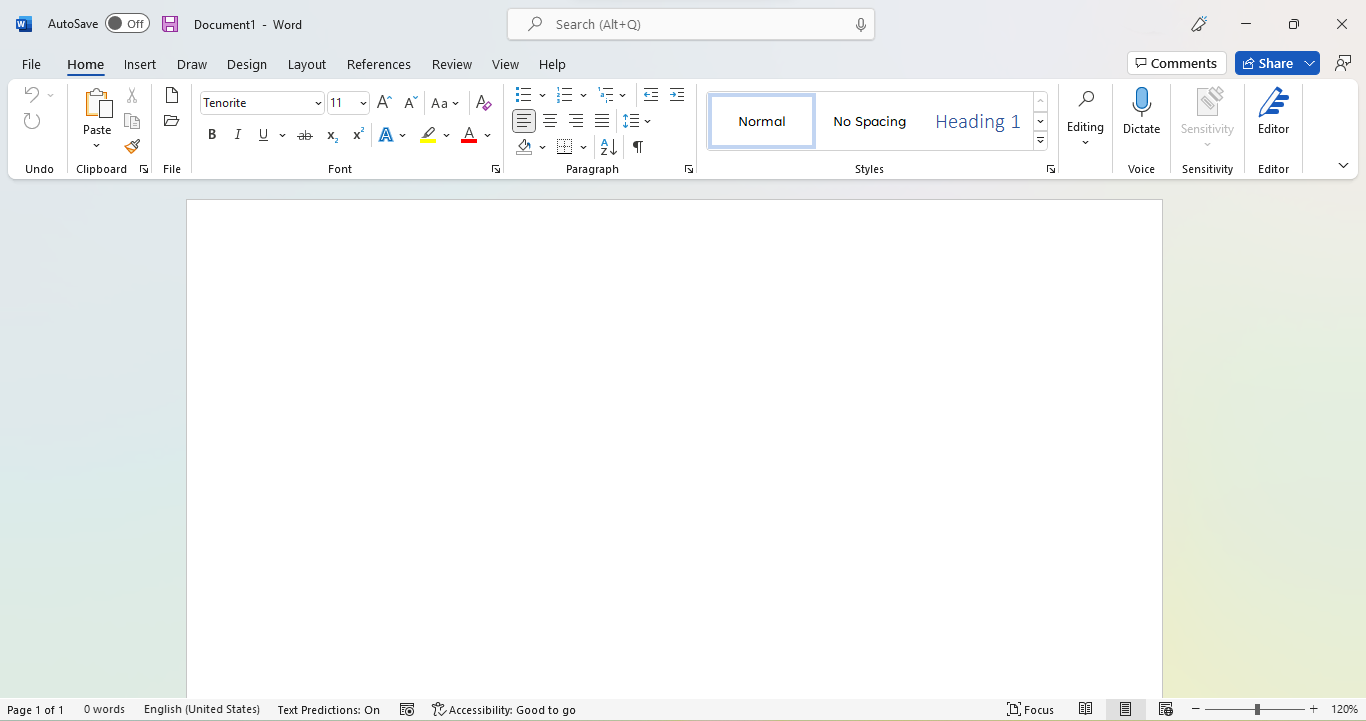
Track Changes and threaded comments make review cycles easy to follow, and coauthoring works close enough to Docs that switching doesn’t feel like a downgrade.
Where it separates itself is storage and integration. Every document lives in OneDrive or SharePoint with 1 TB of storage per user, and Teams is built in for anyone who wants chat and video without leaving the Microsoft ecosystem.
Pros:
- Copilot drafts, rewrites, and summarizes directly inside Word for paid tiers
- Track Changes with advanced markup keeps review cycles auditable
- 1 TB of OneDrive storage per user, well beyond Docs’ shared Drive limits
- Familiar interface for anyone who’s used desktop Word, cutting onboarding time
Cons:
- Meaningful collaboration benefits require the full Microsoft 365 subscription, not Word alone
- Formatting can get messy when a document passes through non-Word apps
How Microsoft 365 Compares to Google Docs: Coauthoring works close enough between the two that switching barely registers day to day. The real gap is depth: Track Changes gives reviewers a level of markup control that Docs’ suggestion mode doesn’t fully match, and 1 TB of OneDrive storage per user solves the file-sprawl problem that Docs never addresses. Neither tool, though, does anything to organize dozens of documents into something searchable once you’re past a handful of files.
User Rating: 4.6/5 (13,900+ reviews)
Pricing: Free for Microsoft users on existing plans; Business Basic paid tier from $7/user/month
3. Notion – Best for Combining Notes, Docs, And Databases In One Workspace
I use Notion when a document needs to live next to a database, a runbook that also tracks open questions as a linked table, for example.

The block-based editor is flexible enough to hold a wiki, a project tracker, and a set of meeting notes side by side without switching tools.
The free plan alone is generous enough to run a small-team wiki, not a stripped-down trial. Once a workspace gets bigger, the tradeoff is that nothing forces contributors to check for existing content before creating a new page, so duplicates pile up without someone actively owning the structure.
Pros:
- Notion AI drafts, summarizes, and answers questions across the workspace on the Business tier
- Free plan supports a small-team wiki, not just a trial
- Flexible blocks and linked databases let a doc and its open questions live together
- Reorganizing an entire workspace takes an afternoon, not a migration project
Cons:
- Full AI access is bundled exclusively into the $20/user Business tier
- Without someone owning the taxonomy, workspaces turn into a maze fast
How Notion Compares to Google Docs: Docs is built to hold one document at a time. Notion is built to hold a workspace, so a runbook can sit next to a linked table of open issues instead of living in a separate spreadsheet. The tradeoff is setup discipline: Docs’ flat folder structure is dead simple, while Notion’s flexibility means someone has to actively own the structure, or duplicate pages start piling up.
User Rating: 4.7/5
Pricing: Free; Plus from $10/user/month (annual billing)
4. Confluence – Best for Engineering And IT Teams Already Running On Jira
Confluence earns its spot for one reason: if a team already lives in Jira, tying documentation directly to tickets and code commits is an advantage Docs can’t offer.

Space-level permissions cleanly separate a public-facing help center from internal engineering notes under one account.
Rovo AI now ships from the Standard tier, adding agents, search, and chat that reviewers say have meaningfully improved what was previously the platform’s weakest point. That said, search complaints haven’t disappeared entirely, and navigation still gets messy fast without an enforced page structure.
Pros:
- Rovo AI brings agents, search, and chat starting on the Standard tier
- Space-level permissions separate team, department, and company-wide knowledge cleanly
- Native Jira integration ties documentation directly to tickets and release timelines
- Page version history with diff views supports accountability on edits
Cons:
- Search still frustrates some reviewers despite the recent AI additions
- Content sprawls into a “muddled mess” without a team enforcing structure
How Confluence Compares to Google Docs: Docs has no real concept of team-level structure; it’s one flat Drive folder shared by whoever has the link. Confluence’s space-level permissions and native Jira integration solve the organization and access-control problems Docs was never designed for, though that structure comes with a steeper learning curve than opening a blank Doc and typing.
User Rating: 4.5/5
Pricing: Free up to 10 users; Standard from $5.42/user/month
5. Coda – Best for Teams That Want A Doc And A Database To Act As One Tool
Coda is the tool I’d point to if a team keeps building spreadsheets on the side of every document because Docs can’t hold structured data.

Its formula language turns a page into a working system, tracking a launch, running a lightweight CRM, without ever leaving the doc.
Pricing is based on Doc Makers rather than every user, so viewers and editors stay free. That’s a meaningful advantage for read-heavy teams, though performance noticeably slows once a doc grows large, and there’s no dedicated desktop app.
Pros:
- Formula language brings spreadsheet-style logic inside a written document
- Doc Maker pricing keeps viewers and editors free; only creators are billed
- Combines structured data and free-form writing on the same page
- Deep customization supports building lightweight internal tools, not just documents
Cons:
- Performance slows noticeably once a document grows large
- No dedicated desktop app, and it isn’t fully reliable in Safari
How Coda Compares to Google Docs: Docs can hold a table, but Coda’s formula language turns that table into a working system, tracking a launch or running a lightweight CRM without ever leaving the page. That structure is the whole reason to switch, but it also means Coda takes more setup effort than opening a blank Doc and typing.
User Rating: 4.6/5
Pricing: Free plan available; Team from $12/month per Doc Maker
6. Nuclino – Best for Small Teams Who Want A Fast, No-Frills Wiki
Nuclino is the one I’d recommend to a small team that just wants a simple, fast wiki without a steep setup.

The interface stays out of the way, and the graph view shows how documents connect to each other, not just where they sit in a folder tree.
It’s quick to search across everything written, and desktop, web, and mobile apps are all included at the same price. The tradeoff is a much smaller review base than the larger names on this list, and making an entire workspace public means publishing each item individually.
Pros:
- Clean, distraction-free interface with almost no learning curve
- Graph view shows how documents connect, beyond a folder hierarchy
- Fast, reliable search across the entire workspace
- Desktop, web, and mobile apps are included at every paid tier
Cons:
- Smaller review sample than the larger tools on this list
- Publishing an entire workspace publicly means doing it item by item
How Nuclino Compares to Google Docs: Docs’ search only works within one Drive folder at a time. Nuclino’s graph view and fast search are built specifically to show how documents connect across an entire workspace, which is the exact problem that pushes teams to look for a Docs alternative in the first place. It’s a much smaller company than Google, though, so the review base and long-term feature roadmap are both thinner bets.
User Rating: 4.7/5
Pricing: Paid plans from €6/user/month
7. Zoho Writer – Best for Teams Already Inside The Zoho Ecosystem
Zoho Writer is the pick if a team wants a free, standalone editor without Docs’ Google account requirement.

The interface is collapsible and legible, and pairing it with Zoho Mail auto-populates contacts when sharing a document, a small but useful shortcut.
On its own, it’s a capable editor with solid export options. Pricing runs on a credit system rather than a flat per-user fee, with 200 credits included free every month and add-on credits priced at $0.25 each once you go over.
Pros:
- Free, standalone editor with a clean, uncluttered design
- Auto-populates contacts for sharing when paired with Zoho Mail
- Fast, collapsible editing interface built for finding tools quickly
- 200 free credits every month before any add-on cost kicks in
Cons:
- A small Capterra review sample makes it harder to judge at scale
- Credit-based pricing takes more effort to estimate than a flat per-user rate
How Zoho Writer Compares to Google Docs: Both are free, browser-based editors with a similar core feature set, and neither solves the organization problem once documents start piling up. The real difference is ecosystem: Zoho Writer makes the most sense for a team already on Zoho Mail or Zoho Workplace, where the integration pays off, rather than as a standalone reason to leave Docs.
User Rating: 4.4/5
Pricing: Free up to 200 credits/month; add-on credits from $0.25/credit
8. ONLYOFFICE – Best for Budget-Conscious Teams Who Need Real Microsoft Format Compatibility
ONLYOFFICE is the alternative I’d suggest to a team that opens and sends a lot of DOCX and XLSX files and is tired of formatting breaking on export from Docs.

It edits Microsoft formats with strong fidelity, not an approximation, and a self-hosted option exists for teams with data residency requirements.
There’s a 30-day free trial to test it before committing, and reviewers describe setup as no-hassle. The tradeoffs are less brand recognition than Microsoft or Google, and pricing that requires a quote rather than a published number you can compare at a glance.
Pros:
- True DOCX, XLSX, and PPTX compatibility, not a lookalike format
- 30-day free trial to test the full product before paying anything
- Self-hosted option available for data residency requirements
- Straightforward setup with little to no configuration hassle
Cons:
- Less brand recognition than Microsoft or Google, which can slow team buy-in
- Custom pricing means no published rate to compare against other tools upfront
How ONLYOFFICE Compares to Google Docs: Docs handles Google’s own formats natively but often mangles DOCX and XLSX files on import and export. ONLYOFFICE solves that specific problem with genuine Microsoft format fidelity, plus a self-hosted option that Docs simply doesn’t offer for teams with data residency requirements.
User Rating: 4.5/5
Pricing: 30-day free trial available; custom pricing thereafter
9. Dropbox Paper – Best for Teams Already Storing Files In Dropbox
Dropbox Paper is the lightweight option for a team already paying for Dropbox storage that doesn’t want to add another subscription just for docs.

It comes free with any Dropbox account, and embedding a file, image, or even a Spotify link directly into a page is simple.
It’s made for quick shared notes and visual project pages, not polished, print-ready documents. There’s no offline mode to speak of, and formatting stays fairly basic if the goal is a more structured document.
Pros:
- Comes free with any Dropbox account, no separate purchase required
- Clean, distraction-free writing space for brainstorming and planning
- Embeds Dropbox files, images, and media directly into a page
- Built-in timelines and task lists for lightweight project pages
Cons:
- Formatting stays basic, not made for polished or heavily structured documents
- No offline mode to speak of, which matters without a stable connection
How Dropbox Paper Compares to Google Docs: Both offer free, real-time editing with a similarly low barrier to entry. Paper’s edge is native Dropbox file embedding for a team already storing everything there, but it trades away Docs’ more mature formatting tools, so it fits quick shared notes better than a polished, structured document.
User Rating: 4.4/5
Pricing: Free plan available; paid Dropbox plans with Paper included from $15/user/month
10. Quip – Best for Salesforce Teams Who Want Chat And Docs Together
Quip makes sense for a team already running on Salesforce that wants conversation and content in the same place.

Chat-style comments sit right next to the text they reference, and built-in spreadsheets and task lists live inside the same document instead of a separate tab.
Native Salesforce data integration is the standout differentiator for sales teams specifically. Support has reportedly gotten harder to reach since Salesforce’s acquisition, and documents that aren’t clearly titled get hard to find later.
Pros:
- Chat-style comments are tied directly to the content they reference
- Built-in spreadsheets and task lists inside the same document
- Native Salesforce data integration for sales teams working across systems
- Works well on both mobile and desktop with instant notifications
Cons:
- Support has gotten harder to reach since Salesforce’s acquisition
- Poorly titled documents are hard to relocate later
How Quip Compares to Google Docs: Docs keeps comments attached to a document and stops there. Quip goes further, folding chat, spreadsheets, and task lists into the same page, which matters specifically for a sales team living inside Salesforce. Outside that specific ecosystem, it doesn’t offer much that Docs doesn’t already handle.
User Rating: 4.4/5
Pricing: From $10/user/month
What Are My Top 3 Picks for Google Docs Alternatives?
ProProfs Knowledge Base: Best for Structured, Searchable Documentation
If the problem is that nobody can find anything three months after it’s written, this is the pick for an easy searchable knowledge base. AI Search Assistant returns one precise answer instead of a list of links to click through, and AI Writer handles the blank-page problem that comes with starting a new article from scratch.
Built-in reports and failed-search tracking finally show which content is working and which pages nobody can find, the kind of visibility Docs never offered.
It’s also the only tool here that’s free forever for a single author managing up to 25 pages, with no credit card required to start, and the paid tier only kicks in at $49/author/month once a team needs more than one person publishing.
Microsoft 365: Best for Real-Time Coauthoring in a Familiar Interface
If your team is already inside the Microsoft ecosystem, this is the least disruptive move away from Docs.
Coauthoring feels close enough to Docs that the switch barely registers, track changes keeps review cycles auditable in a way Docs’ suggestion mode doesn’t fully match, and 1 TB of OneDrive storage per user solves the file-sprawl problem outright.
Teams is included, too, so chat and video don’t need a separate subscription on top of that. For a 10-person team, Business Basic at $7/user/month comes to about $70/month, within the range most teams already budget for a productivity suite.
Notion: Best for Combining Notes, Docs, and Light Project Tracking
If documentation needs to sit next to a database, not just other documents, Notion is the strongest fit here.
A runbook can live beside a linked table of open issues on the very same page, project trackers and meeting notes can share a workspace with the actual documentation, and the free plan alone already supports a small-team wiki without hitting a hard wall.
Paid plans start at $10/user/month for Plus, which adds unlimited file uploads and longer version history, but full Notion AI, including drafting and cross-workspace search, is locked behind the $20/user Business tier, specifically a real cost jump for a team that wants AI assistance from day one.
Evaluation Criteria
I evaluated the Google Docs alternatives in this list the same way I’d want a colleague to evaluate them for me: based on what actually happens once a team stops writing one document and starts managing dozens of them. This method employs six key factors:
User Reviews / Ratings: I pulled every rating in this piece from Capterra, and I read beyond the star count to the actual complaints, since a 4.5 with “search is terrible” repeated 50 times tells me more than the number itself. That pattern matters here specifically because search and findability are exactly why teams start looking for a Google Docs alternative.
Essential Features & Functionality: I weighed permissions, search, hosting, and reporting far more heavily than editing polish, because Docs already edits fine. What it’s missing is the ability to organize a growing library of documents, so that’s the bar every tool on this list had to clear or miss.
Ease of Use: I thought about how fast someone could get a new contributor writing and publishing without a training session, because that’s exactly the kind of low-friction onboarding that made Docs the default in the first place. A tool that trades that away needs to earn it back somewhere else.
Customer Support: I looked at how responsive support actually is when something breaks, especially during setup and migration, since moving a Drive full of documents into a new system is where most teams hit their first real snag.
Value For Money: I checked whether the price matches what a team actually gets, not just the number on the pricing page, because a cheap tool nobody keeps updated ends up costing more in lost documentation than a pricier one that gets used properly.
Personal Experience / Experts’ Opinions: For the tools I’ve used hands-on, my own experience is baked directly into what I wrote. For the rest, I leaned on patterns that repeat consistently across independent reviews rather than any single reviewer’s opinion.
FREE. All Features. FOREVER!
Try our Forever FREE account with all premium features!
The Right Fix Depends on What’s Actually Broken
Google Docs isn’t going anywhere, and it shouldn’t. It’s still the fastest way to draft something with a colleague this afternoon, and nothing on this list argues otherwise.
The alternatives here aren’t about replacing that use case; they’re about what happens after the draft, once a document becomes part of a growing library, someone has to organize, secure, and keep it findable.
That’s the split this whole list comes down to. If the complaint is about the editor itself, formatting, offline access, or price, one of the word processors here solves that directly, and the search is over.
But if the complaint sounds more like “I know that document exists somewhere,” no editor swaps changes that. It takes a tool built to hold a library of content, not just one file at a time.
ProProfs Knowledge Base is the tool I’d point a team toward in that second situation. It’s the one on this list built specifically around the problem Docs was never meant to solve: organizing, securing, and making a growing body of documentation searchable, rather than just editing a single file.
Frequently Asked Questions
What's the best free alternative to Google Docs?
It depends on what's missing. For a free editor alone, Zoho Writer or ONLYOFFICE both work well for individuals. For free, structured documentation with search and access control built in, ProProfs Knowledge Base is free forever for up to 25 pages and one author, with no credit card required to get started or evaluate it properly.
Can I migrate my existing Google Docs into a knowledge base?
Yes. Most knowledge base tools, including ProProfs Knowledge Base, support importing Word, PDF, and HTML content directly, and free migration assistance is commonly included on paid plans. Export your existing Docs to Word format first, then import them in bulk without losing headings, formatting, or embedded images along the way.
Is Microsoft Word better than Google Docs for teams?
It depends on the team's own priorities. Word wins on formatting fidelity, Track Changes, and OneDrive storage for polished, print-ready documents. Google Docs stays simpler for lightweight, fast document collaboration with no software to install. Neither one solves the harder problem of organizing dozens of scattered documents into one searchable library.
Do I need a knowledge base if I already use Google Drive?
If your team can still find what it needs in seconds and nobody's asking "where did that document go again," you're probably fine for now. Once search stops working reliably, access control starts mattering, or reporting on what's being read becomes important, a knowledge base solves problems that Drive's folder structure was never built to handle.
Which Google Docs alternative works best for internal documentation?
Confluence and ProProfs Knowledge Base both handle internal documentation well, with the deciding factor usually being whether your team already lives inside Jira and the Atlassian ecosystem. Notion also works well for smaller teams that want internal documentation sitting right next to lightweight project tracking and databases in one shared workspace.
Can I keep some content public and some private in these tools?
Yes, several tools on this list support exactly that split. ProProfs Knowledge Base and Confluence both let you run a public-facing help center alongside a private internal wiki under role-based permissions from a single account, something Google Drive's all-or-nothing link sharing was never really designed to handle cleanly at scale.
How do I choose between a word processor and a knowledge base tool?
Ask what's broken first. If the complaint is editing, formatting, or offline access, a better word processor solves that directly. If the real complaint is "I can't find anything I wrote months ago," no editor fixes that. It's a structural problem, and it needs a proper knowledge base, not another writing tool.
Does ProProfs Knowledge Base support real-time collaborative editing?
Yes, multiple authors can work on content simultaneously, with role-based permissions controlling exactly who can write, edit, and publish each article. It's paired with AI Writer for drafting and AI Search Assistant for retrieval, both designed to manage a growing library of documentation rather than to edit a single standalone file.
FREE. All Features. FOREVER!
Try our Forever FREE account with all premium features!

 We'd love your feedback!
What did you like & how can we make it even better?
 Thanks for your feedback!
 Ask Your Question
Have a question? Get expert help to make your decision easier.